
How I Route My Side Hustle Money Through an LLC
When your casual morning side hustle turns into consistent thousands, it’s time to formalize. Here is the no-nonsense guide to setting up a Single-Member LLC, getting a free EIN, and building a banking firewall to make your Schedule C a breeze -- without paying for expensive corporate packages.

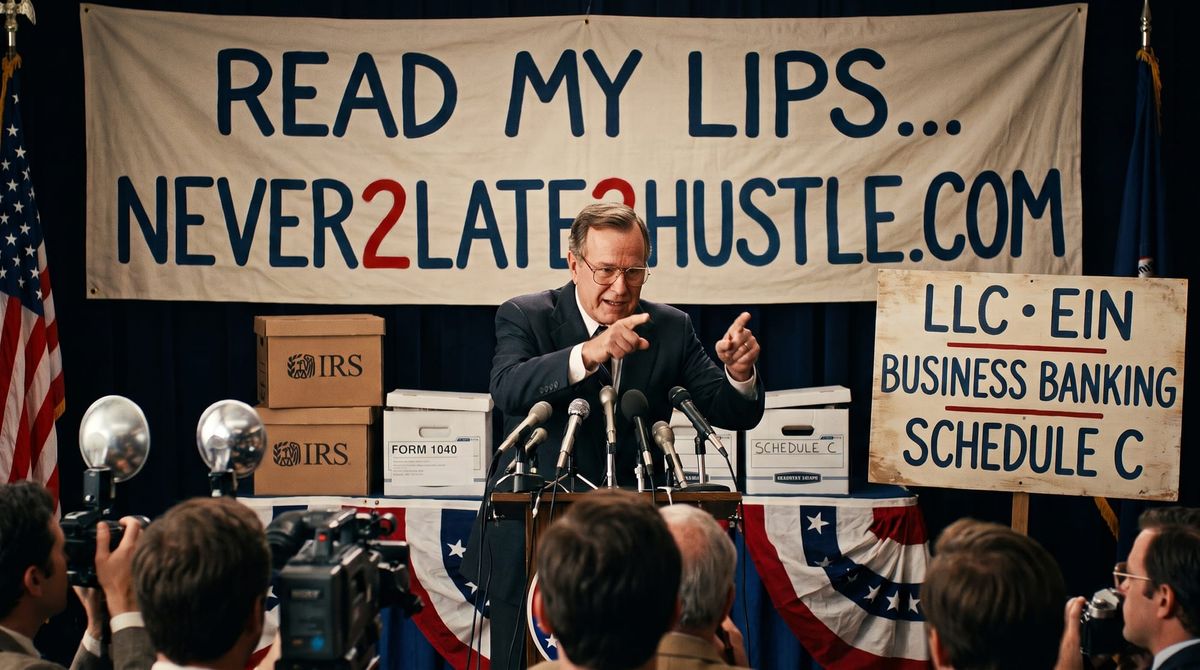
When you first start grinding out $1.50 surveys on Prolific or talking out loud to websites on UserTesting at 6:30 in the morning, the last thing on your mind is corporate tax structure. You’re mostly just wondering if the coffee is done brewing and how quickly PayPal is actually going transfer $14.20 to your side hustle money account.
Eventually, though, the pennies turn into hundreds, and the hundreds really do turn into thousands. Right around the time you realize this side hustle thing is actually becoming a legit part of your retirement plan, a mild panic may set in:
Wait a second. What happens at tax time? Do I have to report this income? Am I supposed to be tracking expenses?
If you read generic financial blogs, they will probably either tell you to ignore it completely until you get a "1099" (the tax form) or they’ll try to sell you a $799 corporate formation package with an embossed leather binder you’ll never open.
You don’t need the leather binder...
I run my side hustle income and expenses through an independent, single-member LLC. I didn’t pay a lawyer thousands of dollars to set it up and it doesn't require an accounting degree to maintain. Here is how I set mine up, why, and what you may want to consider if you want to formalize your own operation.

Step 1: The Single-Member LLC
Full disclosure: I didn’t form a brand-new LLC from scratch this year just to side hustle.
I actually registered my LLC about ten years ago for a completely different business. When that chapter unceremoniously closed, I didn't dissolve the company – I just let it sit dormant on the shelf. When I started taking this online hustle seriously, I realized I already had the legal shell sitting right there waiting for me. All I had to do was file my state's simple annual report to make sure everything was current and I was back in business.
If you are starting from zero, setting up a Single-Member LLC (Limited Liability Company) should be pretty straightforward depending on your state. My $.02:
- Skip the middleman: You don’t need LegalZoom or a pricey third-party service. Just go directly to your state’s Secretary of State website (or Department of State depending on where you live).
- File Articles of Organization: In most states, it’s a two-page online form and a one-time filing fee (usually somewhere between $50 and $150 to form but definitely check your state because some states like CA and MA charge a heavy annual fee on top of that).
- Keep it active: Depending on your state, you’ll just need to file an annual or biennial report (usually online) to say "Yep, still here."
Why bother with an LLC at all for surveys and user testing? Separation. An LLC can create a legal "wall" between you (the human with a house, a mortgage, and a family) and the business (the entity operating on websites, signing platform agreements, and collecting payouts).
Step 2: The 5-Minute Free Federal EIN
Once your LLC exists, I'd recommend a federal Employer Identification Number (EIN) – even if you don't have a single employee and never plan on hiring anyone. Think of an EIN as a Social Security Number for your business.
This is where a lot of side hustlers get scammed by websites charging $99 to "file" for an EIN. Do not pay for an EIN.
You can get one directly from the IRS website for $0.00 in about five minutes during normal business hours. You plug in your LLC details, click submit, and it generates a PDF confirmation letter on the spot.
Step 3: The Banking Firewall (PayPal Business & Amex)
If you’ve read my post on The Pillars, you know I am a big believer in keeping side hustle money completely quarantined from household bill money so it never accidentally gets spent on groceries or a random Amazon impulse buy.
Running an LLC takes that Firewall and makes it official. If you mix your personal grocery money with your business income in the same checking account (what accountants call co-mingling funds), you can ruin the entire point of having an LLC and create a potential headache when it’s time to do your taxes.
To keep my infrastructure 100% clean, I set up two dedicated accounts using my LLC paperwork and that old EIN:
- The Collector (PayPal Business): Almost every worthwhile side hustle platform – Prolific, CloudResearch Connect, UserTesting, UserInterviews, dscout – pays out via PayPal. By setting up a dedicated PayPal Business account tied to my LLC, every single $0.75 survey and $10 test lands in one central, isolated bucket.
- The Vault & Expense Card: Clickworker, however, does not use PayPal so for them the money routes into a dedicated small business bank account (NerdWallet says these are the best). This is also where I pay for business expenses like this website.
When platforms pay me, it goes into the business PayPal (or bank account for Clickworker). I never have to sit down in April with a highlighter and 10 pages of personal bank statements trying to remember if a $12 charge was for website hosting or a sandwich.
Step 4: The Tax Reality Check (Schedule C)
Here is the question that stops most Gen Xers from setting up an LLC: "Does this mean I have to file a whole separate corporate tax return?"
No.
By default, the IRS treats a Single-Member LLC as what they call a "disregarded entity." That is fancy government speak for: For tax purposes, you and the LLC are the same person.
Come tax time for 2026, I won't be filing a complicated corporate return. Everything that happens inside my LLC simply flows right onto Schedule C (Profit or Loss From Business) attached to my normal personal 1040 tax return.
The math is caveman-simple:
- Gross Income: Add up all the payouts that hit the business accounts from Prolific, Connect, UserTesting, and any other hustles.
- Business Expenses: Subtract the legitimate costs of running the business (website hosting, domain registrations, dedicated software, equipment, annual state filing fees).
- Net Profit: Whatever is left over is what gets taxed (self-employment tax, roughly 15.3% on most of it, on top of regular income tax) and what ultimately feeds the retirement pillars.
Because every dollar in and every dollar out only touches those dedicated PayPal and business accounts, "doing the books" takes about twenty minutes and maybe a basic spreadsheet.
So, Do You Actually Need an LLC?
Let’s be real: if you are just poking around on Prolific while waiting in the school pickup line to make $40 a month, you do not need an LLC. But...
You should consider setting up the LLC when:
- You are consistently generating real money across multiple platforms and want a clean way to track it.
- You have real business expenses you want to deduct cleanly.
- You want or need a psychological and financial Firewall that forces you to treat your side hustle like an actual business rather than a hobby.
At 50, I don't have the time or energy for sloppy financial admin. Dusting off my LLC, locking in the business PayPal and business bank accounts, and letting Schedule C handle the rest means the administrative side of the hustle runs on autopilot – leaving me free to focus on earning the cash and investing more.
Disclaimer: I’m not a CPA or an attorney. Tax laws and LLC filing fees vary by state, so always check your local state website or chat with a tax pro regarding your specific situation. And again don't forget your name should be on everything.